Most homeowners think of their loft as a quiet, unused space above the ceiling — out of sight, out of mind.
But what if your loft was quietly affecting your health every single day?
If your home still uses fibreglass insulation, the truth is, you may be breathing in more than just warm air this winter. Fibreglass might seem harmless on the surface — but over time, it breaks down and becomes a hidden threat to the air you and your family breathe.
Let’s explore how, why, and what you can do about it.
What Is Fibreglass Insulation and Why Is It Still Used?
Fibreglass insulation became popular in the UK after asbestos was banned. It was the quick, affordable fix — cheap to produce, non-flammable, and easy to install. But does that mean it’s the best option for modern homes?
While it performs decently when new, fibreglass starts to deteriorate as the years go on — and that’s when the problems start.
The Microscopic Danger You Can’t See
So what’s the risk? Why is fibreglass insulation being called a health hazard?
Here’s what most homeowners don’t realise:
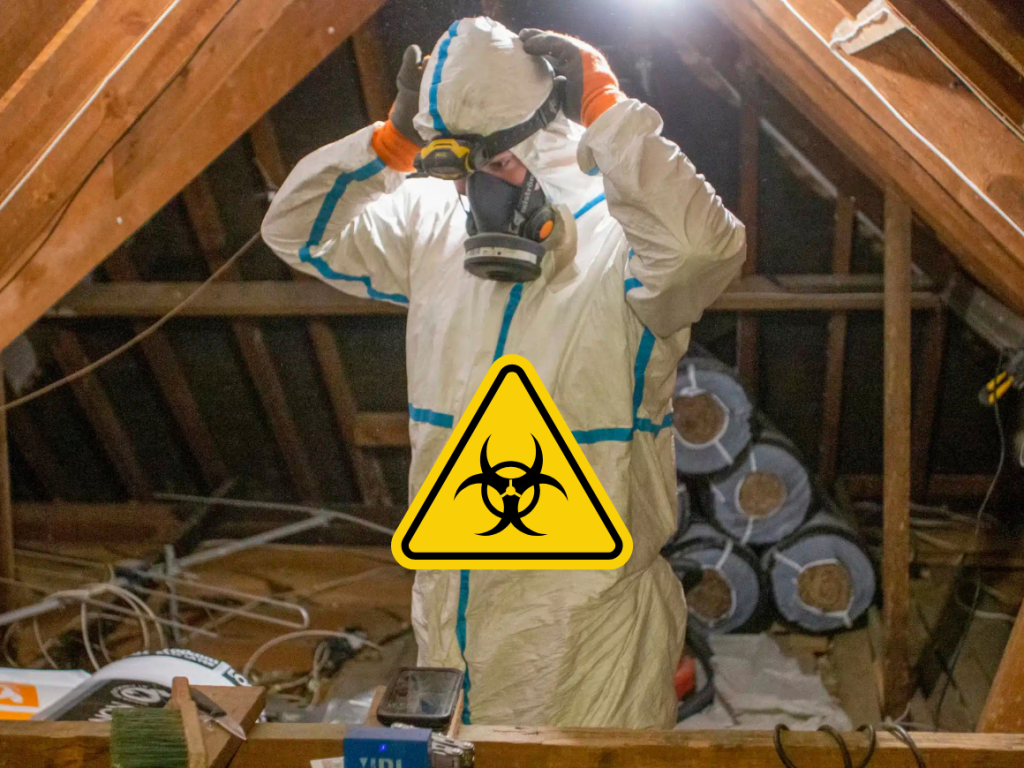
As fibreglass ages, it begins to shed microscopic particles — tiny glass fibres that can become airborne and circulate through your home.
You may not see them, but they can:
-
Irritate your eyes, nose, throat, and lungs
-
Aggravate asthma and allergies
-
Trigger skin reactions or persistent coughs
-
Lead to chronic respiratory issues over long-term exposure
And with modern homes being more airtight than ever, once those particles enter your living space — they tend to stay.
How Does It Get Into the House?
“But my insulation is in the loft — how can it affect me?”
Here’s how those particles make their way down:
-
Through gaps in the ceiling, downlights, loft hatches, or pipework
-
Via air pressure changes from extractor fans or open windows
-
Every time you open the loft hatch, disturbing the insulation
-
Over time, as particles settle on surfaces and circulate through the air
The result? Your loft becomes a source of indoor air pollution — one that’s active 24/7.
Is It Just Health — or Are There Other Problems?
Unfortunately, fibreglass insulation causes more than just health concerns. It also:
-
Loses effectiveness as it compresses and sags
-
Absorbs moisture, leading to damp and mould
-
Harbours dust, pests, and bacteria in poorly ventilated lofts
-
Costs you money as your heating escapes through the roof
So the real question is: why are we still relying on a material designed over 70 years ago?
The Safer, Smarter Alternative: EcoQuilt® by EcoSeal
At EcoSeal, we believe your home’s insulation should protect more than just your energy bill — it should protect your health too.
That’s why we created EcoQuilt®, a modern multifoil insulation system that:
-
Contains zero loose fibres
-
Reflects heat instead of absorbing it
-
Doesn’t sag, degrade, or trap moisture
-
Installs cleanly, quickly, and safely
It’s the 21st-century answer to a decades-old problem — and it’s now endorsed by the Roofing Advisory Service.
Should You Be Worried?
If your loft insulation is:
-
More than 10 years old
-
Made from fibreglass
-
Starting to look dusty, damaged, or sagging
Then yes — it’s time to ask some serious questions.
✅ Would you keep using a heater that leaks gas?
✅ Would you ignore black mould behind the walls?
Then don’t ignore what’s happening above your ceiling.
Ready to Breathe Easier?
Replacing old fibreglass with EcoQuilt® isn’t just a smart move — it’s a healthier one.
👉 Request Your Free EcoQuilt Proposal Today
Let our team show you exactly how we can help you upgrade your home’s insulation safely, cleanly, and efficiently — with no pressure to buy.
Your lungs will thank you.
So will your heating bill.